
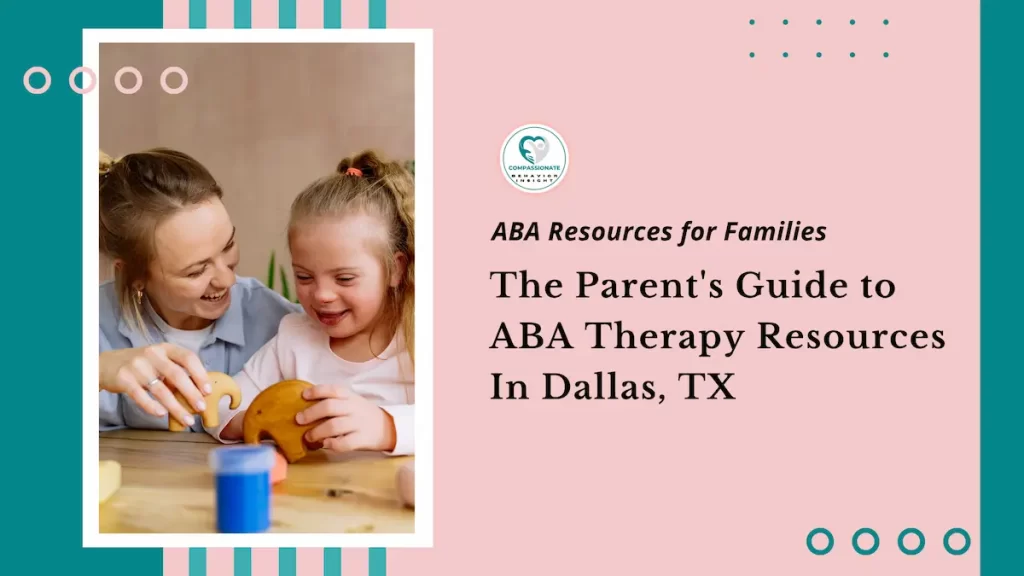
Receiving an autism spectrum disorder (ASD) diagnosis or navigating early developmental delays can feel like stepping into unfamiliar territory. For parents across the Dallas-Fort Worth metroplex, the initial search for guidance often leads to a confusing maze of clinical terminology, waitlists, and conflicting advice. Finding trustworthy, evidence-based ABA therapy in Dallas is one of the most impactful steps you can take to bring structure, communication, and confidence into your home.
According to developmental surveillance data published by the Centers for Disease Control and Prevention (CDC), approximately 1 in 36 children is identified with autism spectrum disorder. Early intervention during early childhood provides the highest return on investment for long-term independence. However, therapy does not happen in a vacuum. A child thrives when their clinical support links seamlessly with their school, community, and home routines.
Whether you are looking for early intervention or specialized behavioral support, understanding how to access ABA therapy in Dallas is the first step toward long-term success. At Compassionate Behavior Insight, led by Board Certified Behavior Analyst (BCBA) Yuri Rivera, we partner with families throughout North Texas. This comprehensive local resource guide brings together clinical support options, community organizations, school district insights, and healthcare navigation tools to help your family build a thriving support ecosystem.
Table of Contents
ToggleUnderstanding the Autism Support Ecosystem in North Texas
When searching for ABA therapy in Dallas, families quickly learn that North Texas offers a rich network of clinics, in-home clinicians, and specialized programs. The challenge rarely lies in finding options; it lies in identifying high-quality, compassionate providers that fit your family’s unique lifestyle, culture, and values.
An effective autism support network functions as an integrated circle:
- Diagnostic Specialists: Developmental pediatricians, child psychologists, and pediatric neurologists who provide formal assessments.
- Direct Behavioral Clinicians: Board Certified Behavior Analysts (BCBAs) and Registered Behavior Technicians (RBTs) who implement Applied Behavior Analysis.
- Allied Health Professionals: Speech-language pathologists (SLPs) and occupational therapists (OTs) who address motor and articulation needs.
- Educational Advocates: Special education coordinators, teachers, and advocates who support Individualized Education Programs (IEPs).
- Community Peer Networks: Local Dallas parent support groups, sensory-friendly community spaces, and recreational programs.
By understanding how these moving parts fit together, parents can make informed decisions rather than feeling rushed through a reactive healthcare system.
Clinical Support Options: Navigating In-Home and Community Care
Applied Behavior Analysis is widely considered the gold standard for autism intervention. Backed by the Behavior Analyst Certification Board (BACB), ABA uses the science of learning to help children increase communication, develop self-care skills, and reduce unsafe behaviors like elopement or severe meltdowns.
Choosing the right delivery model for ABA therapy in Dallas often comes down to your family’s daily routine and your child’s specific sensory needs.
1. In-Home Behavioral Support
For many families, in-home ABA therapy in Dallas provides the ideal setting for skill development. Natural environment teaching allows the therapist to target real-life goals in the exact spaces where those skills are needed:
- Mealtime routines at the family dining table.
- Brushing teeth and dressing independently in the home bathroom.
- Sibling communication during unstructured play in the living room.
- Smooth bedtime and wake-up transitions without the stress of clinic commutes.
Our team specializes in personalized in-home ABA therapy across Dallas, eliminating the need to transition dysregulated children into clinical facilities after a tiring school day.
2. Virtual and In-Person Parent Coaching
Children spend far more time with their parents than with therapists. Even twenty hours of weekly therapy leaves more than one hundred waking hours under family guidance. Seeking dedicated parent coaching equips caregivers with the exact prompting, reinforcement, and de-escalation tools used by clinicians. This consistency ensures that progress made during therapy hours carries over into weekends, grocery store outings, and family gatherings.
3. Comprehensive Services Hub
To explore how diagnostic evaluations, insurance pre-authorizations, and individualized intervention plans come together, explore our complete guide to ABA therapy in Dallas. This evergreen guide details the scientific mechanics of the Antecedent-Behavior-Consequence (ABC) model and explains how clinical care adapts across different age groups.
Dallas Neighborhoods and Communities We Serve
The Dallas-Fort Worth metroplex spans over nine thousand square miles, each community featuring distinct school systems, recreational programs, and neighborhood identities. Families seeking ABA therapy in Dallas live throughout diverse communities, each requiring localized care that respects community dynamics and cultural backgrounds.
Compassionate Behavior Insight provides direct, home-based services and caregiver training across key North Texas cities and neighborhoods:
- Dallas County: North Dallas, Lake Highlands, Lakewood, Uptown Dallas, Deep Ellum, Preston Hollow, Oak Cliff, Duncanville, DeSoto, Cedar Hill, and Grand Prairie.
- Collin County: Plano, Frisco, Allen, and McKinney.
- Eastern and Northern Suburbs: Richardson, Garland, Carrollton, Mesquite, and Farmers Branch.
- Western Metroplex: Irving, Las Colinas, and surrounding DFW communities.
For families with Spanish-speaking households, access to bilingual clinicians is not a luxury; it is a clinical necessity. Compassionate Behavior Insight proudly offers 100% bilingual clinical delivery in English and Spanish, ensuring that parents, grandparents, and caregivers can communicate comfortably with their clinical team.
Essential Dallas Autism Community Resources and Support Groups
While clinical ABA therapy in Dallas forms the core of developmental intervention, family well-being depends on peer connection, respite options, and social spaces where neurodivergent children are accepted without judgment.
Local Parent Organizations and Advocacy Groups
- FEAT-North Texas (Families for Effective Autism Treatment): A long-standing non-profit organization serving the DFW metroplex. FEAT-NT provides parent education workshops, community resource directories, family social events, and meetings for families navigating ASD.
- The Arc of Greater Dallas: An organization dedicated to advocating for the rights of individuals with intellectual and developmental disabilities. The Arc provides educational seminars, family support services, and socialization programs for youth and young adults.
- Texas Early Childhood Intervention (ECI): A statewide program administered by the Texas Health and Human Services Commission (HHSC). ECI serves families with babies and toddlers from birth up to thirty-six months who have developmental delays or medical conditions. Dallas-area programs like Metrocare Services and The Child Study Center connect eligible infants with speech, physical, and behavioral therapies early.
- Prism Health North Texas and Community Health Centers: Community healthcare partners providing low-cost pediatric screenings and medical referrals for families without commercial insurance.
Sensory-Friendly Dallas Cultural Venues
Dallas offers several community landmarks that host dedicated sensory-friendly days, dimming lights, lowering noise, and offering visual schedules for children with sensory processing differences:
- The Dallas Zoo: Hosts Sensory Friendly Mornings with designated quiet zones and modified sound effects throughout animal habitats.
- The Perot Museum of Nature and Science: Offers sensory mornings with reduced crowds, lowered exhibit volumes, and sensory kits equipped with noise-dampening headphones.
- The Dallas Museum of Art (DMA): Coordinates sensory-friendly family days featuring low-stress art exploration and quiet retreat rooms.
- Sensory-Friendly Cinema Screenings: Local theater chains throughout Dallas, Plano, and Frisco provide adjusted lighting and flexible seating policies for children with autism.
Navigating Insurance and Texas Medicaid for Autism Services
When budgeting for ABA therapy in Dallas, parents often have questions about out-of-pocket costs, copayments, and plan deductibles. Navigating health insurance policies can feel daunting, but state legislation provides strong legal protections for autism intervention.
Texas Insurance Code Chapter 1355
Under Texas law, most state-regulated fully-insured commercial health plans are legally required to provide coverage for Applied Behavior Analysis as a medically necessary treatment for autism spectrum disorder. This includes coverage for initial assessments, direct therapy hours, and mandatory parent consultation.
Texas Medicaid and STAR Kids
Children receiving Medicaid in Texas access specialized behavioral health services through programs like STAR Kids. STAR Kids covers BCBA assessments and individualized behavioral therapy for eligible children under twenty-one diagnosed with ASD. To access this benefit, families work with their managed care organization (such as Superior HealthPlan, Amerigroup, or Parkland Community Health Plan) to secure primary care physician referrals and clinical authorizations.
Verification Checklist for Dallas Families
Before booking your initial appointment, contact your health plan administrator and ask these targeted questions:
- Does my specific policy include coverage for CPT codes 97151 (BCBA assessment), 97153 (direct therapy), and 97156 (parent training)?
- Is a formal medical diagnosis from a clinical psychologist or physician on file?
- What are my annual deductible, out-of-pocket maximum, and specialist copayments?
- Does my plan require pre-authorization before the initial assessment can take place?
Our administrative team assists Dallas families with complimentary insurance verification, demystifying your benefits before care begins.
Educational Partnerships Across North Texas School Districts
Aligning clinical goals from ABA therapy in Dallas with classroom accommodations creates seamless consistency for school-age children. When educators and behavior analysts use shared prompting strategies and visual schedules, children experience far fewer behavioral disruptions during the school day.
Public school districts across the DFW metroplex operate under federal guidelines established by the Individuals with Disabilities Education Act (IDEA):
- Dallas Independent School District (Dallas ISD): Offers comprehensive special education services, including specialized autism support classrooms, inclusion coteaching models, and Behavior Intervention Plans (BIPs).
- Plano ISD & Frisco ISD: Nationally recognized for structured Regional Day School Programs and robust Multi-Tiered System of Supports (MTSS) addressing behavioral and academic readiness.
- Richardson ISD & Garland ISD: Provide tiered special education support, assistive technology evaluations, and paraprofessional classroom guidance.
Parents have the legal right under IDEA to request a Full and Individual Initial Evaluation (FIIE) in writing through their child’s campus special education coordinator. When campus teams meet for an Admission, Review, and Dismissal (ARD) committee meeting, having objective behavioral data from an outside BCBA ensures that your child receives meaningful accommodations like sensory breaks, visual timers, and task modifications.
What to Look for in a Dallas Autism Provider
Selecting a provider for ABA therapy in Dallas requires evaluating quality markers that go beyond marketing claims. Whether your child requires early intervention, functional language building, or emotional regulation support, look for these clinical standards:
5 Essential Quality Markers for ABA Providers
- Direct BCBA Oversight: Supervising clinician actively attends sessions rather than managing from afar.
- Manageable Caseload Ratios: BCBAs maintain 8 to 12 cases maximum, ensuring genuine, attentive supervision.
- Assent-Based Philosophy: Prioritizes child comfort and dignity; eliminates punitive or compliance-only goals.
- Active Caregiver Involvement: Parent coaching is treated as an essential, non-negotiable part of treatment plans.
- Bilingual Cultural Competence: Complete clinical delivery and communication in the family’s primary language.
Compassionate Behavior Insight is built upon these exact principles. Led directly by Yuri Rivera, BCBA, our practice maintains small, attentive caseloads, offers 100% bilingual capability, and focuses on helping children communicate authentically rather than enforcing rigid compliance.
Frequently Asked Questions About Dallas Autism Resources
How do I know if my child needs ABA therapy in Dallas?
If your child experiences persistent challenges with expressive language, social play, safety awareness (such as running toward streets), intense emotional meltdowns, or rigid routines that disrupt family life, an assessment is warranted. Consulting an experienced autism specialist in Dallas, TX provides objective insight into your child’s developmental profile and outlines whether targeted behavioral support is recommended.
At what age should we begin searching for autism therapy Dallas providers?
Early intervention can begin as early as eighteen months. Research confirms that the brain possesses its highest degree of neuroplasticity between ages two and five. However, Applied Behavior Analysis is equally effective for elementary students and adolescents who need support with executive functioning, hygiene routines, and community social skills. It is never too late to begin.
Does Texas insurance cover in-home ABA therapy in Dallas?
Yes. Texas state law mandates autism insurance benefits for most fully-insured commercial health plans, covering both in-home and clinic-based intervention when prescribed by a physician as medically necessary. Texas Medicaid through STAR Kids also covers home-based ABA for qualifying children.
How does in-home behavioral support differ from traditional clinic centers?
In-home services teach functional skills directly within the child’s natural environment. Rather than practicing handwashing or mealtime behavior in a simulated clinic room, the child learns in their own bathroom and kitchen. This approach accelerates skill generalization and allows parents to observe and practice behavior strategies in real time.
How can our family begin services with Compassionate Behavior Insight?
Starting services begins with a complimentary discovery call. Our clinical team discusses your child’s developmental history, reviews current insurance benefits, and schedules a comprehensive clinical assessment with Yuri Rivera, BCBA.
Building a Strong Foundation for Your Child
Navigating autism resources across North Texas takes patience, but you do not have to walk this path alone. By connecting with local community organizations, understanding your legal rights at school, and partnering with experienced clinicians who value your family culture, you can create a home environment where your child feels safe, capable, and understood.
Investing in high-quality ABA therapy in Dallas equips your child with essential life skills, relieves caregiver stress, and builds a sustainable roadmap for lifelong independence.
Compassionate Behavior Insight is proud to serve Dallas families. Schedule your free consultation today. Reach out directly through our contact us page or call our clinical team to take the first step toward compassionate, personalized care.